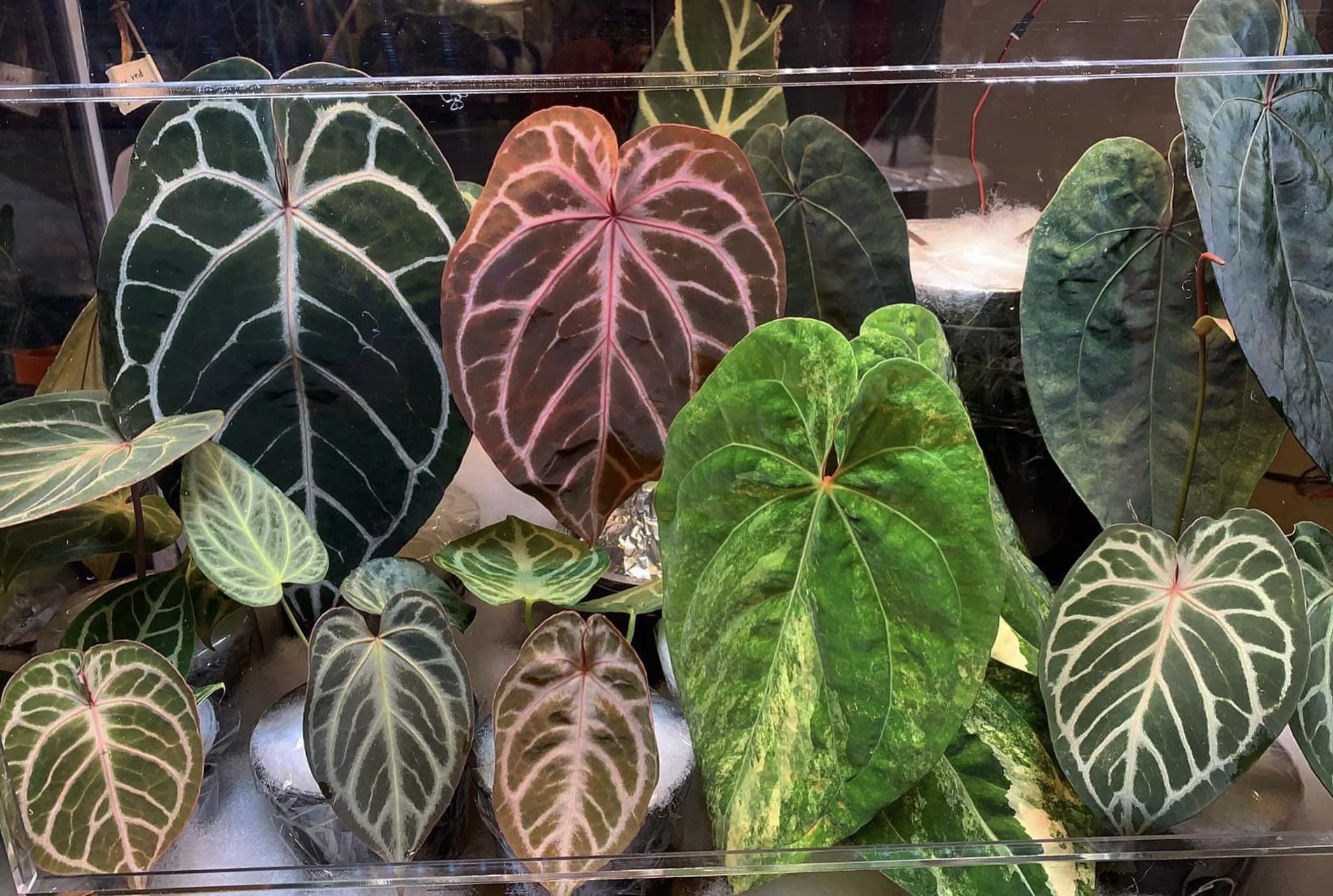
Two Anthurium seedlings can come from the same cross and still grow into remarkably different plants. They may share the same parentage, batch number, or identification code, but their mature leaves can differ in shape, color, venation, texture, sinus, lobes, and overall character.
In other words, a name does not make the leaf.
This is one of the most interesting lessons we have learned through many years of collecting, growing, and breeding Anthurium. It is not a rule intended to tell anyone what they should or should not collect. It is simply a story from our own journey, one that gradually changed the way we look at plants.
When We First Started Collecting Anthurium
Our journey with Anthurium began with passion.
Like many collectors, we were fascinated by certain leaf shapes and characteristics. Most of the plants we admired had recognizable names or came from well-known crosses, so those names naturally became the starting point of our search. During our early years, we often looked for plants by name. We believed that if we found the same name or the same cross, we would eventually receive a plant that looked similar to the specimen we had admired.
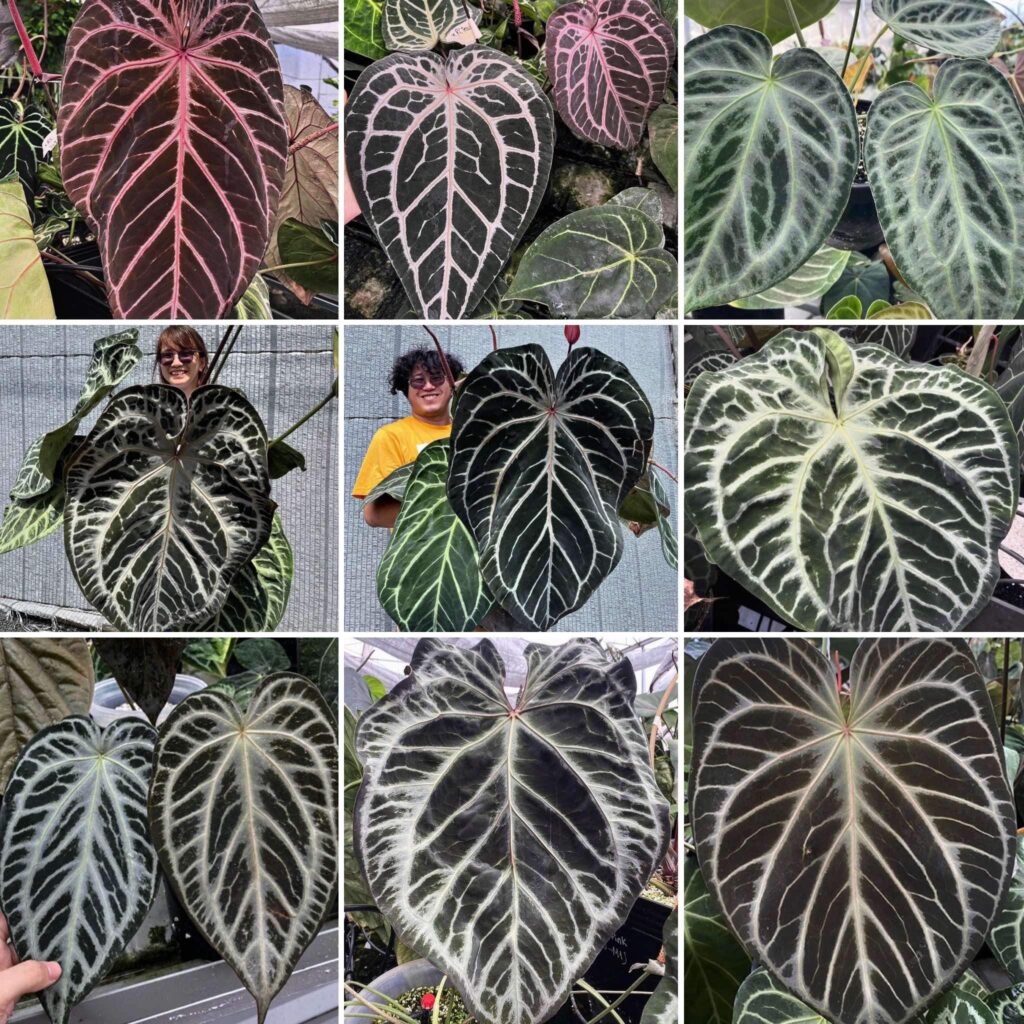
Sometimes that happened. Quite often, however, it did not. For example, all of the plants below are Black Widow × Black Widow (13 × 43) that we purchased from DocBlock, yet each seedling has its own distinct leaf shape and venation pattern.
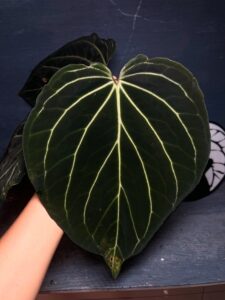
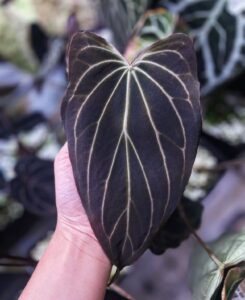
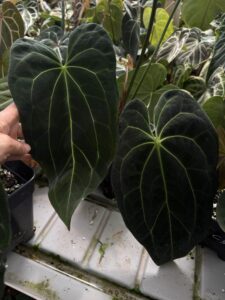
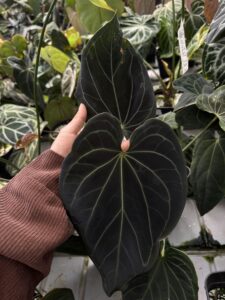
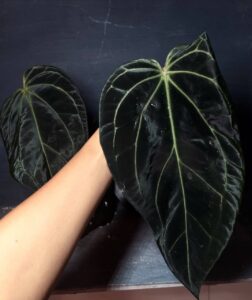
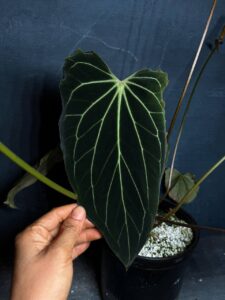
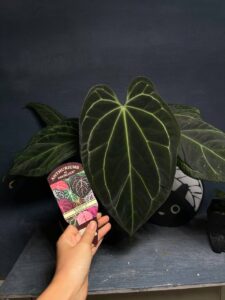
We encountered plants carrying the same parentage or cross name that developed very differently from the images that had first inspired us. Some had different leaf proportions. Others showed less prominent venation, a lighter color, a narrower form, or an entirely different overall appearance.
At first, this could be confusing. Only later, after we began breeding Anthurium ourselves and had opportunities to observe many more plants, did we fully understand why.
Seedlings from the Same Anthurium Cross Are Not Identical
Anthurium grown from seed should not be expected to look identical simply because the seedlings share the same parents.
Each seedling receives its own combination of genetic traits. Within a single batch, some plants may express fewer of the characteristics collectors admire in the parent plants. Many may inherit a recognizable combination of traits from both parents, while a very small number may develop something unusually strong or distinctive, even surpassing their parents in certain features.
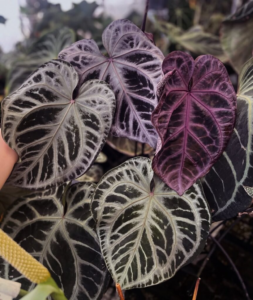
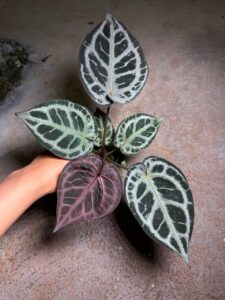
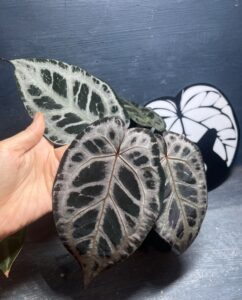
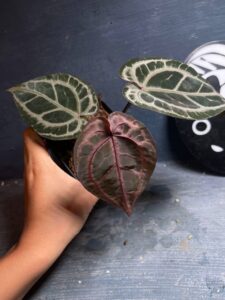
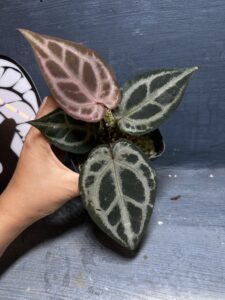
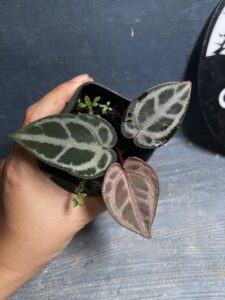
One seedling may inherit a rounder form. Another may develop a longer blade, darker foliage, stronger lobes, a wider sinus, thicker silver veins, or a more intense emergent color. Some differences become visible while the plants are still young. Others only appear as the plants mature.
Growing conditions can also affect how a plant expresses itself. Light, temperature, nutrition, humidity, root health, and maturity may all influence leaf size, color, texture, and proportions. However, even when siblings are grown under similar conditions, their genetic differences can still produce clearly different results.
This variation is one of the reasons Anthurium breeding is both unpredictable and exciting.
Why Plants from the Same Batch Can Have Different Prices
People sometimes ask why several seedlings carrying the same cross or batch ID have different prices.
The reason is that an ID records origin; it does not guarantee appearance.
A batch ID can tell us that the seedlings came from the same pollination and share the same parent plants. It cannot promise that every seedling will inherit the same form, color, venation, or growth characteristics.
For growers, producing a cross is only the beginning. The next stage involves growing many seedlings, observing them over time, and selecting individual plants according to their expressed traits.
Some seedlings may be relatively common within the batch. Others may show a particularly balanced form, unusually dark foliage, exceptional venation, strong color, or a combination that appears only rarely.
For this reason, nurseries, including Le Toro Jardin, may assign different prices to plants from the same cross. The difference is based on the individual plant and the qualities it has actually expressed, rather than on parentage alone.
What Does an Anthurium Name Really Represent?
Names play an important role in the Anthurium world. They help growers identify individual plants, maintain breeding records, trace genetic lines, and communicate more clearly with collectors.
Many named Anthurium cultivars began as exceptional individuals selected from a much larger group of seedlings. Once one of these plants is chosen and named, the name becomes associated with that specific individual.
Plants propagated vegetatively, through cuttings, divisions, or true-to-type tissue culture, are clones of the selected plant. Because they share the same genetic identity, they can rightfully carry the same cultivar name, although their appearance may still be influenced by growing conditions and maturity. Seed-grown offspring are different.
When a named plant is used as a parent, its seedlings inherit a new combination of genes. They may carry certain recognizable characteristics from the parent, but they are not copies of it and should not be expected to develop exactly the same appearance.
Understanding this distinction allows us to appreciate what a name genuinely tells us: the identity of a particular cultivar or the parentage behind a cross, not a guaranteed image of what every related seedling will become.
The Value of Famous Names and the Beauty Beyond Them
Many influential growers and nurseries have devoted years, sometimes decades, to collecting plants, creating crosses, raising large batches, and selecting exceptional individuals. The names they have introduced preserve an important part of Anthurium history and reflect the experience, patience, and dedication behind their work. Plants such as Anthurium King of Spades, Ace of Spades, Queen of Hearts, and Red Crystallinum,… have inspired collectors and breeding programs around the world. Their influence extends beyond the plants themselves, opening new possibilities and shaping new directions in Anthurium breeding.
At the same time, knowing a respected name is not the same as knowing exactly how every related seedling will develop. A name can tell us about provenance, identity, or breeding potential. The leaf in front of us tells us what that particular plant has actually become.
Both kinds of information have value. We can respect the history carried by established names while remaining open to beauty from unfamiliar sources.
Beautiful parents can improve the possibilities of a cross, but they cannot guarantee that every offspring will be equally beautiful. Breeding works with probabilities, not promises.
Likewise:
- A famous name does not guarantee that every seedling will express the parent’s strongest traits.
- A fashionable cross does not guarantee long-term value.
- An unfamiliar or unnamed seedling is not necessarily ordinary.
- A young plant that looks unremarkable today may develop beautifully as it matures.
This is why careful selection matters so much. Behind one exceptional Anthurium, there may be dozens or hundreds of siblings that developed differently. The selected plant is special precisely because its particular combination of traits is uncommon.
Learning to See the Individual Plant
Today, when we evaluate an Anthurium, we still consider its name, parentage, and breeding history, but we do not stop there. We also look carefully at the individual plant:
- What is the balance of its leaf shape?
- How does its color change as the leaf hardens?
- What kind of venation does it express?
- How consistent are its traits across several leaves?
- How does it grow as it matures?
- Does it carry a quality that feels distinctive or memorable?
These questions help us see the plant itself, rather than only the expectations created by its label. For collectors, this approach can also make the journey more enjoyable. Instead of searching only for a famous name, we can learn to recognize the characteristics that genuinely speak to us.
A Name May Preserve a Story, but Beauty Remains Personal
Perhaps a name is simply our way of preserving a moment, a particular leaf, a memorable form, or the emotions a plant once inspired. It may represent a respected grower, a remarkable breeding journey, or many years of passion and dedication. These stories deserve to be remembered. But a name should never become a boundary that limits the way we see and appreciate beauty.
As collectors, we can also take a moment to ask ourselves: What do I genuinely love about this plant? Is it the shape of the leaf, the depth of its color, the texture, the venation, or simply the feeling it gives us?
Anthurium, and beauty itself, can take countless forms. A plant that deeply fascinates one person may not create the same feeling for someone else, and that is completely natural. There is no single form that everyone must admire and no single standard that defines what is truly beautiful.
So, while names and provenance can enrich the story of a plant, we should also allow ourselves the freedom to look beyond them. Explore different forms, trust your own eye, and search for the plants that genuinely speak to you. Perhaps every kind of beauty is simply waiting to meet the right person, the right collector, or the right garden.
And sometimes, the most remarkable leaf begins as a small, unnamed seedling, waiting for someone to notice it.
+84 796 807 715